Post
Digital Lawnmowing: The Making of a Relentless Technology Operator
How Matthew Rubin went from modding an original Xbox at twelve to building businesses, modernizing school technology, and bringing a lifetime of practical problem-solving to Standing Innovation.
By Matthew Rubin · 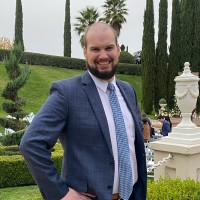
At twelve years old, Matthew Rubin was already looking past the limits printed on the box.
He and his fourteen-year-old brother wanted their original Xbox to do more. Games were expensive, but curiosity was abundant. They studied the Xbox-Scene forums, learned how unsigned code worked, taught themselves to solder, and spent late nights leaning over their father’s billiards table. On their first attempt, they installed an Xecuter 3 modchip successfully.
Then the machine booted into the EvolutionX dashboard.
They replaced its original hard drive with a 400 GB drive ordered from Newegg, learned FTP, and created a system that could store backups of games they owned. The project was not a classroom assignment. Nobody had provided a syllabus. It was a complicated problem, a community willing to share knowledge, and two young people disciplined enough to keep learning until the hardware came alive.
That moment established the pattern Matthew has followed ever since: understand the constraint, listen closely, research the system, and make the technology genuinely more useful.
The neighborhood’s digital lawnmower
The next project began with an HP desktop Matthew earned by volunteering on political campaigns with his mother. It could not run Need for Speed: Hot Pursuit at a playable frame rate. He researched the socket used by its Intel Celeron processor, found a compatible motherboard with an AGP slot, and installed an ATI Radeon 9700 Pro. The game ran perfectly.
Soon the computer moved into a $30 case with blue lights. Later, after more saving, it gained an AMD Athlon 64 3200+. Each upgrade taught the same lesson: a machine is a system of dependencies, and ambition only works when the parts work together.
At thirteen, Matthew noticed that his neighbors had their own frustrating technology problems. He started a small service he would later call “Digital Lawnmowing.” For $20, he removed malware, spyware, and viruses, upgraded routers, and helped families make sense of their computers. He babysat on the side.
The name was playful, but the operating idea was serious. People needed digital maintenance just as surely as they needed someone to cut the grass. Matthew would ask each customer to show him the problem and explain exactly what was frustrating. The work was individual and customized because the person—not the machine—defined whether the solution succeeded.
More than a decade before Standing Innovation began exploring AI workflows, its founding operator had already found the principle at the center of the company: begin with the human experience of the work.
A business under the dorm-room bed
As college approached, Matthew turned repair into commerce. During the Xbox 360’s “Red Ring of Death” era, he acquired damaged consoles, repaired them where appropriate, or sent eligible units through Microsoft’s refurbishment process. He sourced original packaged controllers, power supplies, AV cables, and 120 GB hard drives from different eBay suppliers, then assembled complete bundles with the defining features of an Xbox 360 Elite.
He tested each console, disclosed that it had been refurbished by Microsoft, accepted the occasional return, and sold the bundles on eBay for roughly $100 less than a new Elite. He sold more than thirty. The inventory lived under his dorm-room bed, and the operation generated thousands of dollars in profit for a young entrepreneur.
It also delivered a boundary. Microsoft sent Matthew a cease-and-desist letter alleging abuse of its warranty program. He complied, stopped the Xbox repair operation, and moved on. It was an early lesson that a technically workable process is not automatically a sustainable or acceptable business model. An entrepreneur has to recognize the boundary and change course.
The next course was iPhone repair. Matthew sourced replacement screens, advertised around campus with printed posters, and built relationships with fraternities and sororities that brought him stacks of damaged phones after busy weekends. He tested every repaired device before returning it. The business helped support him through college and ultimately left him with approximately $8,000 to fund what came next.
Products, risk, and the discipline to walk away
Matthew kept looking for emerging technology that could be sourced, understood, and brought to a market. He imported high-powered blue lasers and sold them on eBay with protective goggles and a prominent printed safety warning. The venture produced about $15,000 in total revenue.
It was also risky. Matthew became concerned about his own health and the responsibility attached to the product, so he stopped. Profit did not make the risk disappear.
Searching Alibaba for a better opportunity led him to electric skateboards. The technology was new, the products drew immediate attention, and existing retail prices left room for a different offer. Matthew priced his boards at $699.99, negotiated some sales individually, and personally rode the models he sold. The first rides were exhilarating and uncertain. Confidence came gradually through experience—a literal version of testing his own product before asking someone else to trust it.
While the skateboard business grew, Matthew began developing Standing Innovation’s original product: standing desks. After using an IKEA Jerker as a standing desk, he became convinced that the category represented the future of work. He hired Arizona State design talent, developed concepts in 3D CAD, and commissioned a proper prototype in 6061 aluminum.
The venture never reached commercial sales. The prototype remained with a San Diego manufacturer for about a year and was eventually categorized as scrap and destroyed. COVID-era disruption later severed Matthew’s skateboard supplier relationships as well.
These are not footnotes to hide. They are the distance between a person who likes ideas and an operator who has paid for their lessons. A prototype is not a product. A supplier relationship requires active stewardship. Momentum matters. So does knowing when to pivot.
When the systems became mission-critical
Matthew’s next move took him from consumer technology into public infrastructure. He joined the Maricopa County elections operation as a T-Tech, setting up and troubleshooting voting sites. Supervisors quickly recognized that he could work independently across the environment and promoted him to IT Technician.
His responsibilities grew to include technology supporting 170 voting locations and approximately 1,800 voter check-in computers during the 2020 general election. He repaired and imaged SiteBook devices, sometimes combining verified parts from two failed machines to return one dependable unit to service. Motherboard transplants were familiar territory. The stakes were not.
A repaired SiteBook was not considered ready merely because it powered on. It had to connect to the Ballot-on-Demand workflow, allow an authorized user to sign in, query the database for the appropriate ballot, and support successful printing. The whole chain had to work.
That experience hardened another Standing Innovation principle: a component-level demonstration is not a working system. Reliability has to survive the complete workflow, under real operating conditions, with accountable people in control.
From repairing computers to transforming a school
Matthew carried the WinPE imaging and scripting knowledge he developed in elections to Horizon Honors. He salvaged usable RAM, rebuilt aging PCs, created system images for old and new hardware, and wrote scripts that made repetitive deployment work move as one system. When he reached the top of the role’s pay scale with no path upward, an unexpected advocate intervened. A receptionist with whom he regularly ate lunch slipped him a Post-it listing schools that might be able to afford his growing capabilities.
Saint Francis Xavier had an opening.
The interview happened behind masks during COVID. Matthew became the school’s sole IT leader, received his first dedicated office, and discovered a literal pile of technology waiting inside. The scale was different, but his method was still Digital Lawnmowing: learn what each teacher needed, remove the frustration, and do not let technology stand in the way of the work.
He kept the aging Lenovo fleet viable while putting upgrades first. Cloning hard drives onto SSDs made the improvement immediate: previously sluggish computers became quick and responsive, and teachers could feel the value rather than take it on faith.
Then Matthew proposed something much larger. Using available COVID education funding, he developed a roughly $400,000 schoolwide Apple technology plan that the board approved. The plan included a MacBook Pro and an iPad Pro with Apple Pencil for every teacher, plus Apple TVs in classrooms. His vision was not “buy Apple.” It was a specific teaching workflow: let an educator walk around the room, AirPlay an iPad to the front display, and annotate PDFs live with an Apple Pencil.
He wrote the standard operating procedure and showed teachers how to use the new system. To deploy more than 100 MacBooks efficiently, he programmed unused Arduino boards to perform authorized keyboard-emulation steps, verified operating-system updates, and installed the school’s existing Microsoft Office licenses. He upgraded classrooms for Apple TV support and let teachers help determine what they actually needed.
Freedom at the device did not mean carelessness underneath it. Drawing on years of experimenting with DD-WRT and studying CCNA material, Matthew used Cisco Meraki and separate VLANs for Apple TVs, staff MacBooks, student Chromebooks, and printers. The experience could feel simple because the infrastructure was disciplined.
The operator at scale
Matthew eventually researched the market value of his work, presented the evidence, and negotiated his Saint Francis Xavier salary from $48,000 to $60,000. When Brophy College Preparatory prepared for the retirement of its longtime Senior IT Administrator, he applied for the opportunity.
Brophy entrusted him with a fleet of roughly 1,500 MacBooks. There was a fitting symmetry to the move: before creating the Apple environment at Saint Francis Xavier, Matthew had asked Brophy about its own fleet and first encountered the concept of Mobile Device Management there. Now he had to master that model at full scale.
The hardest part was quantity. At 1,500 devices, every manual action becomes a bottleneck and every inconsistency compounds. Matthew deepened his Bash scripting skills and learned to design around zero-touch enrollment. Today his broader role includes serving approximately 1,450 students and educators, overseeing significant annual Apple procurement, supporting diverse device fleets, and mentoring students in robotics and modern fabrication tools.
Standing Innovation, rebuilt around a lifetime of evidence
The Standing Innovation name began with a standing-desk prototype. It returned when Matthew began building with OpenAI and Codex and recognized a familiar opportunity: powerful technology was becoming available, but most people still needed someone to turn it into useful work.
His career makes him unusually prepared for that responsibility. He has worked at a soldering iron and a boardroom table. He has built businesses from parts stored under a bed, walked away from profitable products when the risk became unacceptable, negotiated with suppliers, supported public election systems, modernized a school, secured networks, automated fleets, and learned that even the best technology fails when people cannot use it confidently.
The through-line is not that every experiment succeeded. It is that Matthew kept converting curiosity into capability and setbacks into operating judgment.
Standing Innovation now expresses that history through a few demanding standards:
- Listen to the person experiencing the problem before proposing the system.
- Make the full workflow work, not just the impressive demonstration.
- Automate repetition without removing human accountability.
- Standardize the foundation while respecting individual needs.
- Test before asking someone else to trust the result.
- Protect the customer even when doing so costs time or opportunity.
- Recognize boundaries, correct course, and keep moving.
The tools have changed—from modchips and AGP slots to WinPE, Bash, MDM, and AI agents. The work has not.
Find the frustration. Understand the system. Build something that earns its place.
This profile is based on an August 2026 interview with Matthew Rubin and his supplied professional history. Personal recollections, dates, financial figures, and venture details should be treated as founder-reported and remain subject to final factual review.